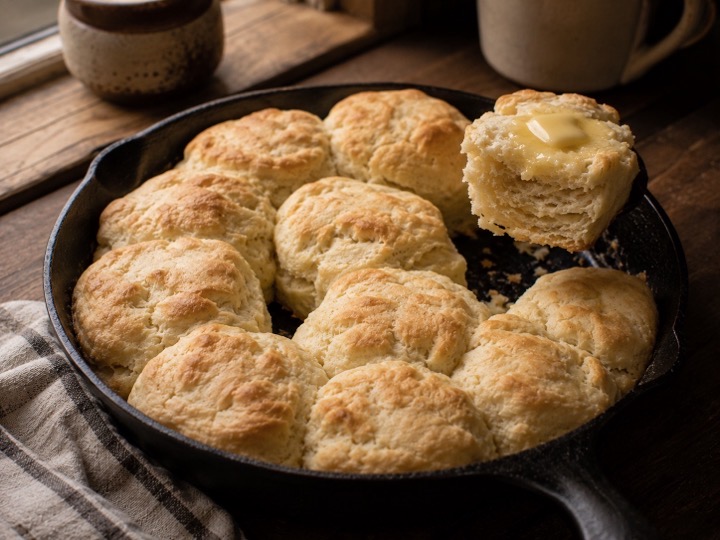
“The coil binding really is convenient and the book lays nicely on my counter. The photographs are great and, of course, all of the instruction is invaluable.”
A little look inside
Pull up a chair.
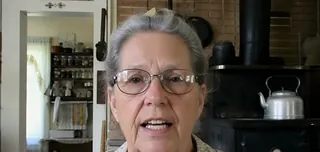
Let me show you the book in this short video. The recipes, measurements, and methods are all written down, ready when you need them.
How it works
Pay once. Keep it. Cook from it whenever you like.
The honest math
A bought supper is easy to count. A pot of beans feeds you more than once. Here is what that difference can look like.
The tired-night way
- Takeout, three times a week$15 to $20 a meal
- Boxed dinner mixespaying for convenience
- Ready-made sidesanother item on the receipt
- A chicken, used onceno plan for tomorrow’s supper
- Groceries bought with no plananother decision every night
My kitchen
- Soup beans and cornbreadunder $1.20 a plate
- Fried potatoes and onionsabout $0.60 a plate
- A pot made onceanother supper ready for tomorrow
- Simple food, made from scratchfamiliar ingredients you can use again
- The knowing of howsixty methods in this book
These are grocery estimates; your store and portions will differ. A printed cookbook you can reach for again and again, with simple ingredients and ways to make them go further.
Look inside
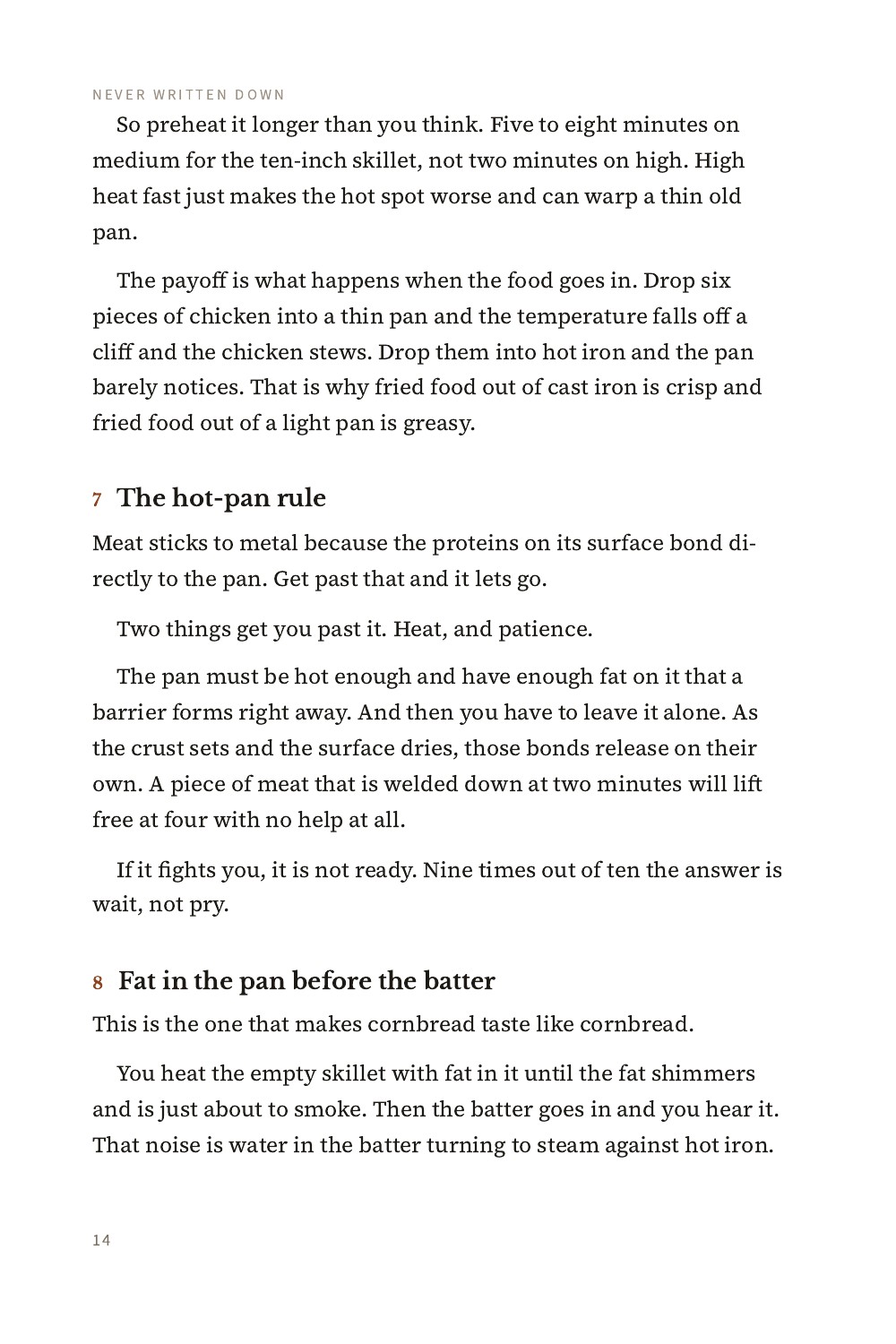
The whole cornbread recipe, and a page of kitchen know-how. These samples are from the digital edition. Tap any page to read it larger.
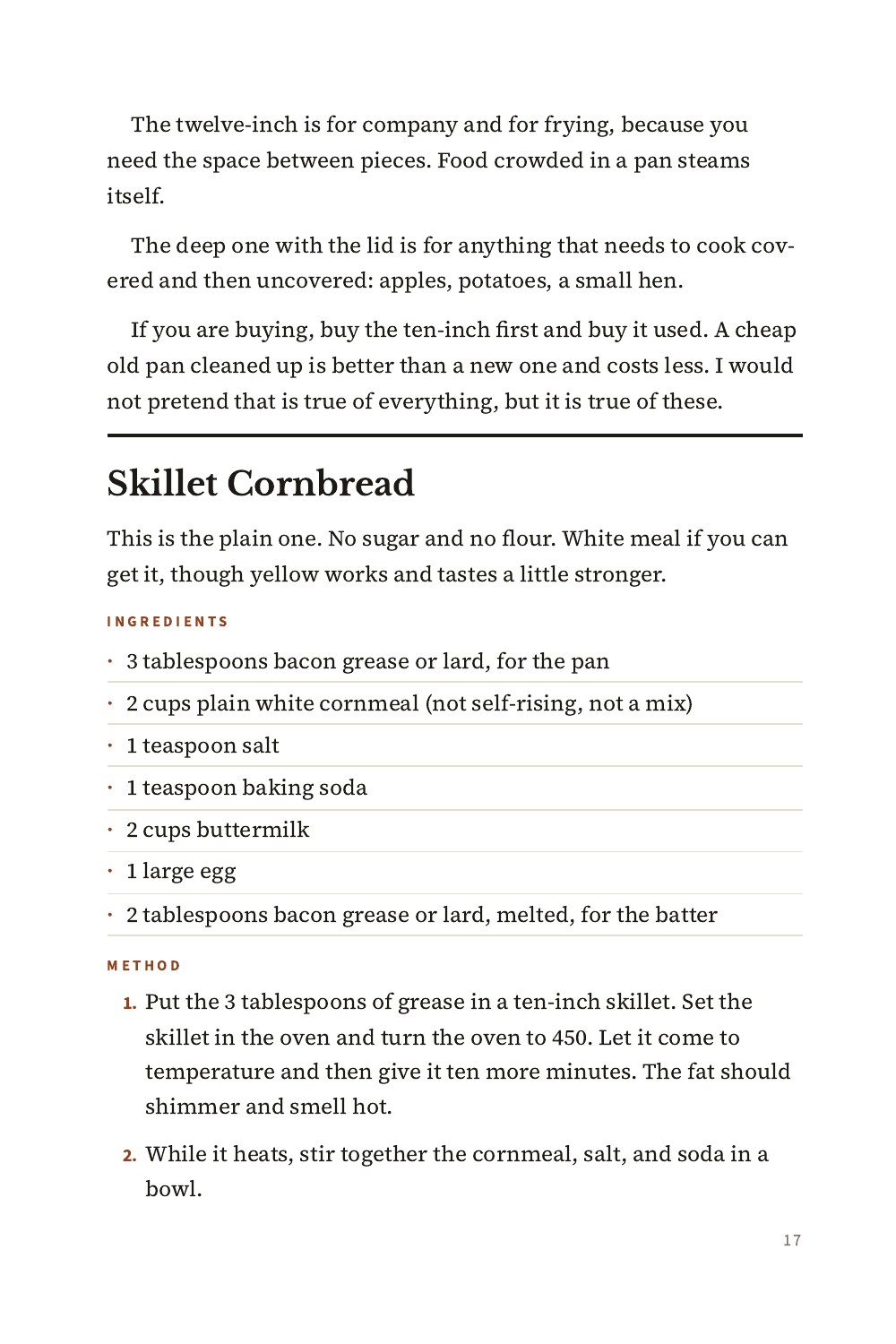 TAP TO ENLARGE
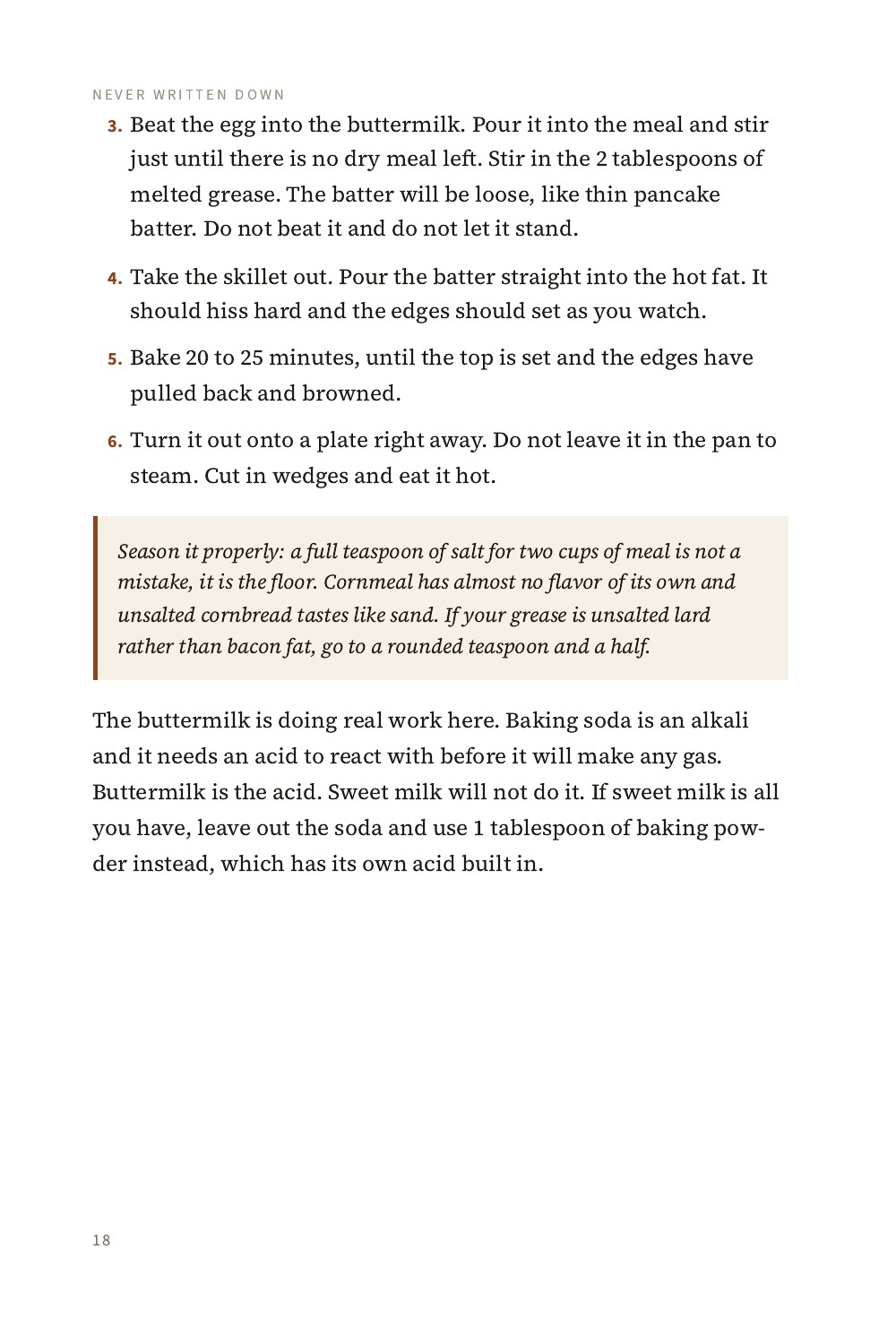 TAP TO ENLARGE
 TAP TO ENLARGE
← Swipe to see more pages →
What’s Inside
Seven chapters and thirty-six recipes. Real quantities, times, and temperatures. Sixty methods explain the why, so you can use what you learn in the next supper, too.
- Skillet cornbread with a crisp crust, and the hot fat that makes it happen · p. 17
- The hot-pan rule, and why the food needs time before you turn it · p. 14
- Biscuits with layers or tenderness, and why butter and lard do different jobs
- A pot of soup beans that softens properly, including what salt really does
- Greens, pot likker, and the trade between color and tenderness, the part a recipe rarely tells you
- Fried chicken, salt pork, and stretching one chicken, the old kitchen’s way with meat
- Apple butter, kraut, and putting food by, the work that kept the cupboard useful
- Potato soup and making do, supper from what you already have
- Cast iron you can keep for years, how to season it and bring an old skillet back
- The 7-Day Cheap Supper Plan, one inexpensive week already figured out · included with the digital edition
- Cooking for One or Two, adapting the recipes without wasting food · included with the digital edition
And that is a fraction of it. Seven chapters, thirty-six recipes, fifty-one photographs, and a seasoning note with every recipe.
A cookbook for your kitchen counter
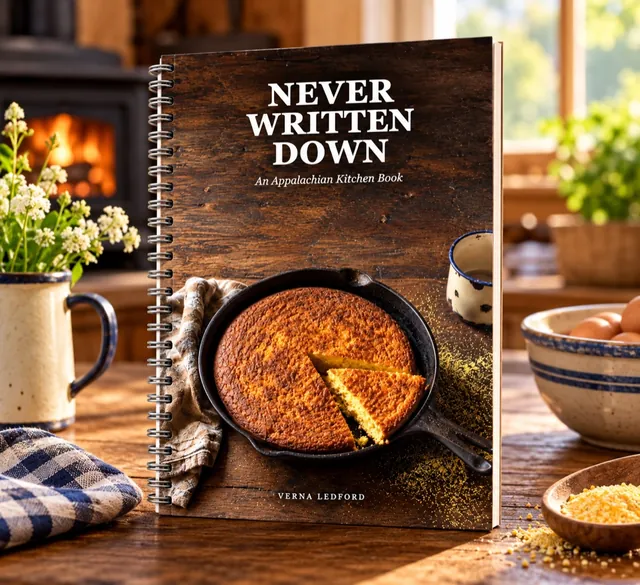
A real book to hold, open flat, and cook from. Printed to order and shipped to your door.
THE PRINTED COOKBOOK
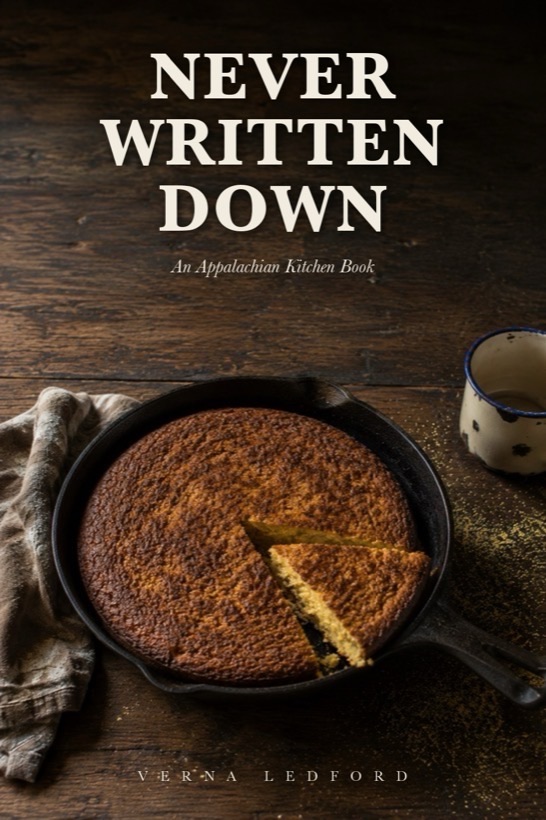
Never Written Down
An Appalachian Kitchen Book
- Coil-bound, so it lies flat on your kitchen counter
- 36 recipes and 60 kitchen methods, with measurements and the reasons they work
- 165 printed pages in full color, arranged in seven chapters
- A book you can hold, with no screen to keep awake while you cook
$59 $39.99
30-day money-back promiseIf it isn’t what you hoped, email me within 30 days of delivery. I’ll refund the book price—no need to return it.
Printed to order · Shipped to your door
Prefer a digital copy?
The 167-page PDF arrives by email. Read it on your phone, tablet, or computer, or print it at home.
Bonuses included with your digital book
- The 7-Day Cheap Supper Plan
- Cooking for One or Two
- Large-print edition
- Blank pages for your family recipes
- Every future addition
One payment, no subscription.
30-day money-back guarantee on the digital book: cook one thing from it. If it is not what you hoped, write to me within thirty days. Every dollar comes back, and you keep the digital book.
“Just wanted to let you know that “Never Written Down” arrived this morning and it is so well done! The coil binding really is convenient and the book lays nicely on my counter. The photographs are great and, of course, all of the instruction is invaluable. I can hardly wait to try all the methods. Thank you for writing them down. What an accomplishment! Keep in touch and again, well done my friend!”
“These recipes are just amazing! Affordable, delicious, and healthy”
“Over 120 pages of deliciousness and affordable meals! Wait till you try the Country Ham with Red-Eye Gravy”
“These recipes are to die for! They remind me of what my mama prepared for us as kids growing up on the family farm.”
Verna Ledford
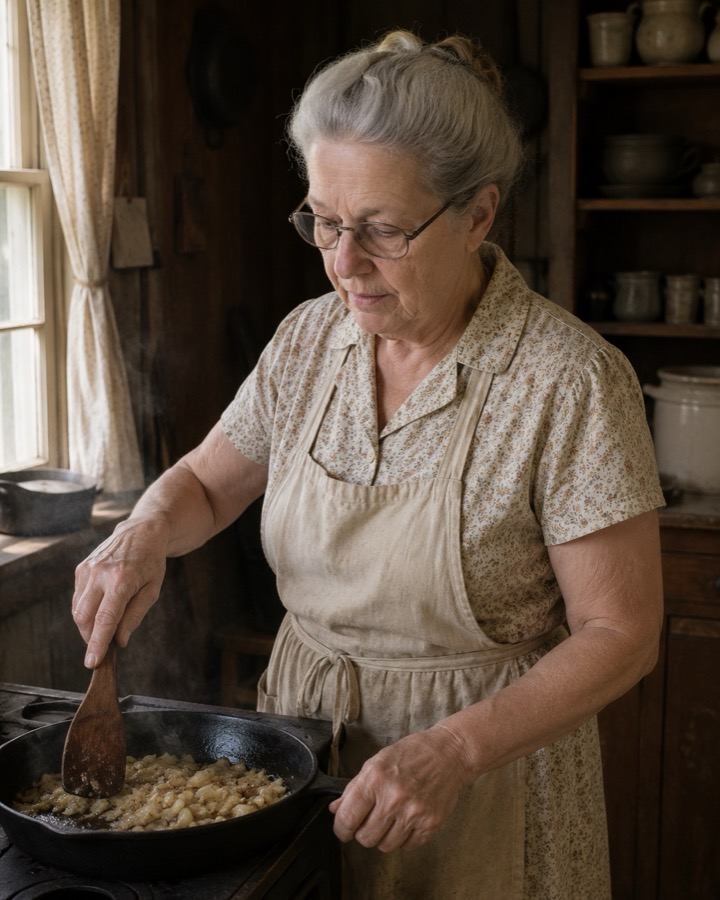
I am seventy, raised in Cocke County, Tennessee. My mother cooked with three skillets and never wrote a word of it down. I learned at her elbow, cooked for a family for forty years, and now cook for one. This book is what I watched and learned, finally set down with the measures and the why.
I am not a chef. I will show you the way I was shown, plain enough to use at your own stove. Every copy helps keep the channel going, with new suppers free three times a week. Thank you for it. Look after yourself.
Verna Ledford
Cocke County, Tennessee
Questions, Answered Honestly
Is this a printed book you mail me?
I am not good with computers. How do I get it?
I am cooking for one now. Is this still useful?
Do I need a cast iron skillet or a wood stove?
Are these real old Appalachian recipes?
Is the book worth it if I already know how to cook?
Is there a large-print edition?
Is this a subscription?
What if I do not like the printed book?
What if I do not like the digital book?
Questions before you buy?
Have a question about the book? Write to me below and I’ll reply by email.
Ready when you are
A printed cookbook for your counter, with the old Appalachian recipes and kitchen know-how you can return to for years.